

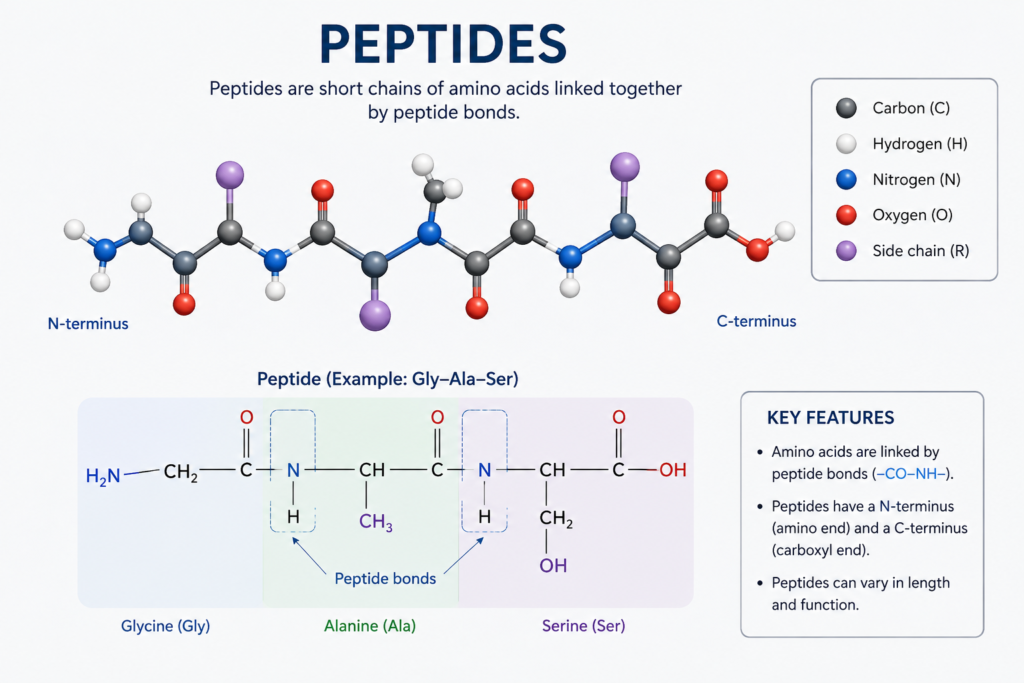
In recent years, peptides have taken center stage in scientific literature, regenerative medicine discussions, and advanced biohacking circles. From investigating cellular repair mechanisms to exploring advanced skincare formulations, these versatile chains of amino acids continue to capture the attention of researchers worldwide.
Whether you are designing a laboratory study, looking into comparative compound profiles, or trying to master proper handling protocols, understanding the fundamentals of peptide science is essential.
1. Understanding the Core: What Are Peptides?
At their most fundamental level, peptides are short chains of amino acids linked by peptide bonds. While they share the same building blocks as proteins, they are shorter in length—typically consisting of anywhere from two to fifty amino acids.
Because of their precise signaling capabilities within biological systems, peptides act as messengers, telling cells how to behave. This targeted interaction makes them invaluable across various research domains, including neurology, immunology, dermatology, and tissue regeneration.
2. Spotlight on Regenerative Research: BPC-157 and TB-500
When exploring tissue repair and recovery kinetics, two compounds consistently dominate scientific discussions: BPC-157 and TB-500.
BPC-157: Often investigated for its remarkable cytoprotective properties, this peptide—derived from a protective protein found in human gastric juice—has been heavily studied for its potential role in accelerating the healing of tendons, ligaments, and muscle tissue.
TB-500: A synthetic version of the naturally occurring healing protein Thymosin Beta-4, TB-500 is frequently researched for its ability to promote cell migration, blood vessel formation (angiogenesis), and tissue regeneration.
Comparing their mechanisms reveals distinct pathways, leading many researchers to examine both their individual effects and potential synergistic applications in laboratory settings.
3. Best Practices: Storage, Reconstitution, and Stability
Precision in laboratory results begins with proper handling. Lyophilized (freeze-dried) peptides are typically supplied as stable dry powders inside glass vials, but their integrity depends heavily on environmental conditions.
Storage: Proper preservation requires maintaining strict temperature controls (often freezing for long-term stability) and shielding compounds from moisture and light degradation.
Reconstitution: Transitioning a dry powder into a usable liquid solution requires precise protocols using bacteriostatic water or sterile diluents, ensuring the molecular structure remains intact without introducing contamination.
4. Beyond the Lab: Peptides in Dermatology
Outside of direct physiological and cellular studies, peptides have also revolutionized modern skincare science. By signaling dermal cells to boost collagen and elastin production, specific peptide sequences help improve skin barrier function, reduce the appearance of fine lines, and support overall skin elasticity and hydration.
Dive Deeper Into Peptide Science
Navigating the complexities of peptide research requires trusted guides, accurate handling protocols, and up-to-date scientific insights.
To explore detailed compound breakdowns, side-by-side comparisons, and professional handling guides, visit the UK Peptide Blog for independent, in-depth resources tailored for researchers and science enthusiasts alike.