

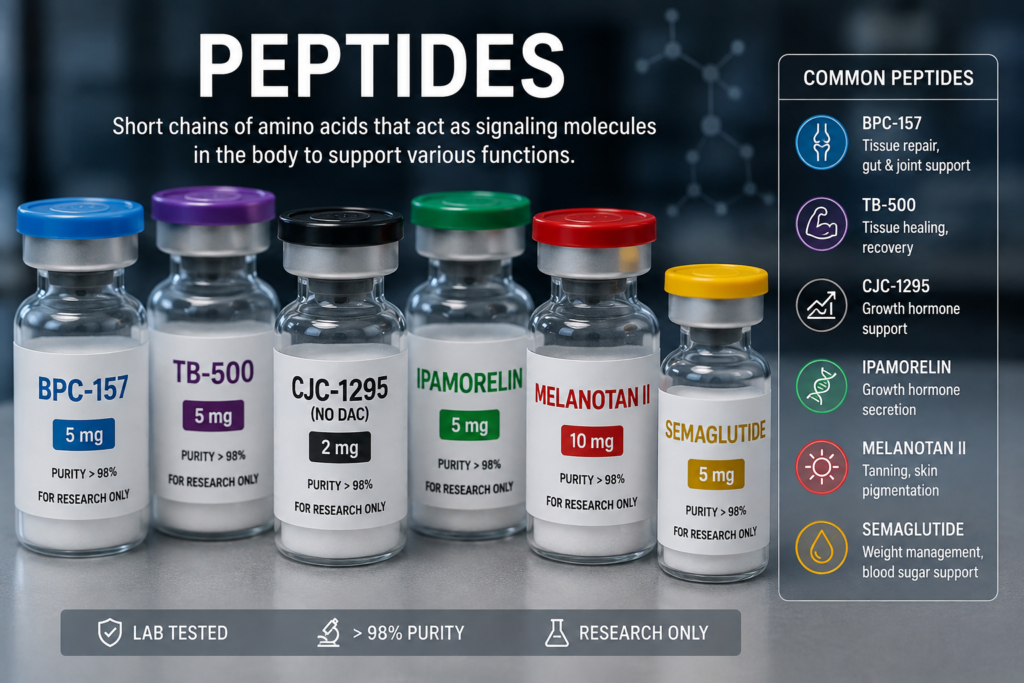
Guides

A Step-by-Step Guide to Reconstituting Peptides

Lyophilized (freeze-dried) peptides arrive as a stable dry powder inside a glass vial. Before research or administration, they must be reconstituted—a process of dissolving the powder into a liquid diluent, typically Bacteriostatic Water (BAC water). Because peptides are fragile chains of amino acids, following aseptic technique and proper handling is essential to avoid contamination or […]

A Step-by-Step Guide to Reconstituting Peptides Read More »
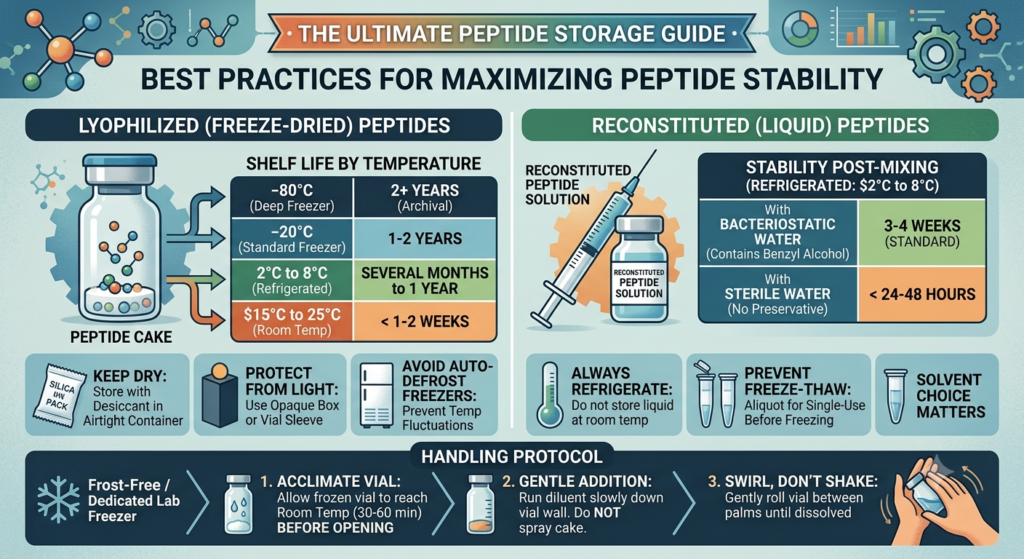
The Ultimate Peptide Storage Guide: How to Preserve Stability, Reconstitute, and Maximize Shelf Life

How to store your peptides properly to maintain stability and purity for research use. Whether conducting laboratory assays or working with research compounds, understanding proper peptide storage and reconstitution protocols is essential. Peptides are fragile chains of amino acids linked by peptide bonds. Improper handling—such as exposure to excessive heat, light, humidity, or aggressive shaking—can

The Ultimate Peptide Storage Guide: How to Preserve Stability, Reconstitute, and Maximize Shelf Life Read More »

What is BPC-157? The Science, Benefits, and Current Research Behind the “Healing Peptide

If you’ve spent any time following recovery, performance, or biohacking science lately, you’ve likely heard about BPC-157. Often dubbed the “healing peptide,” it has generated massive interest for its ability to accelerate soft tissue repair, promote gut health, and assist in systemic recovery. Whether you’re exploring the biochemistry behind tissue regeneration or sourcing high-grade compounds

What is BPC-157? The Science, Benefits, and Current Research Behind the “Healing Peptide Read More »